

Since 1 January 2026, every time refrigerant is added to a covered appliance holding 15 pounds or more of an HFC refrigerant, the owner or operator has to run a refrigerant leak rate calculation. If the result is over the trigger for that type of appliance, a 30-day repair clock starts. This guide walks through both calculation methods in EPA’s rule, with worked examples, and shows which deadlines follow.
Not legal advice. EPA and the regulation text are the authority; the rule is at 40 CFR part 84, subpart C. Refriqo is not affiliated with EPA. Rule text last checked 29 October 2026.
Which appliances are covered
EPA adopted the leak repair requirements in the 2024 Emissions Reduction and Reclamation (ER&R) rule under subsection (h) of the American Innovation and Manufacturing (AIM) Act. According to EPA’s January 2026 fact sheet, beginning 1 January 2026 owners or operators and certified technicians must comply for refrigerant-containing appliances with a charge of 15 pounds or more of a refrigerant that contains an HFC, or of a substitute for an HFC with a global warming potential (GWP) above 53 (EPA leak repair fact sheet).
Two important exclusions:
- Appliances in the residential and light commercial air conditioning and heat pump subsector are not covered. EPA notes that chillers and certain variable refrigerant flow systems fall in their own subsectors, so they are not excluded by this line.
- Appliances that contain only an ozone-depleting substance (for example an HCFC such as R-22) stay under the older Clean Air Act section 608 program at 40 CFR 82.157, which applies at 50 pounds and above.
When you must calculate the leak rate
Under 40 CFR 84.106(b), the owner or operator calculates the leak rate each time refrigerant is added to a covered appliance, with limited exceptions (refrigerant added right after a retrofit or a new installation, and refrigerant added for a documented seasonal variance).
The leak rate is defined in 40 CFR 84.102 as “the rate at which an appliance is losing refrigerant, measured between refrigerant charges,” expressed as the percentage of the appliance’s full charge “that would be lost over a 12-month period if the current rate of loss were to continue.” The same definition sets two methods and adds a constraint that is easy to miss: “The same method must be used for all appliances subject to the leak repair requirements located at an operating facility.”
The first calculation after 1 January 2026
Section 84.106(b) also covers the start-up case. For the first calculation after 1 January 2026, the annualizing method substitutes 365 days as the days since the last addition, and the rolling average method substitutes the pounds added since 1 January 2026. Switching methods is allowed only in narrow circumstances, such as acquiring a facility that used a different method, and the change must be recorded (84.106(b)(3)).
You need the full charge first
Both methods divide by the appliance’s full charge. Section 84.102 lets you determine it by one or a combination of four methods: the equipment manufacturer’s figure; calculations based on component sizes, refrigerant density, piping volume and similar factors; actual measurements of refrigerant added or evacuated; or an established range from the best available data, in which case “the midpoint of the range will serve as the full charge.” Record which method you used, because the full charge drives every result.
The annualizing method, step by step
The four steps in 84.102 are:
- Divide the pounds of refrigerant added to return the appliance to full charge (in one or several additions for the same leak) by the pounds the appliance normally holds at full charge.
- Take the shorter of the days since refrigerant was last added or 365 days, and divide by 365.
- Divide the Step 1 result by the Step 2 result.
- Multiply by 100 to get a percentage.
As one line: leak rate (%) = (lb added / full charge) ÷ (days since last addition, max 365 / 365) × 100.
Worked example: supermarket rack
A supermarket refrigeration rack (commercial refrigeration) has a full charge of 1,200 lb of an HFC blend. A technician adds 90 lb to bring it back to full charge. The previous addition was 60 days earlier.
| Step | Calculation | Result |
|---|---|---|
| 1 | 90 lb ÷ 1,200 lb | 0.0750 |
| 2 | 60 days ÷ 365 days | 0.1644 |
| 3 | 0.0750 ÷ 0.1644 | 0.4563 |
| 4 | 0.4563 × 100 | 45.6% |
The trigger for commercial refrigeration is 20%, so this appliance is over it and the repair requirements apply.
Note how much the elapsed time matters in this method. The same 90 lb added 300 days after the last addition would annualize to (0.075 ÷ 0.822) × 100 = 9.1%, under the trigger.
The rolling average method, step by step
The three steps in 84.102 are:
- Add up the pounds of refrigerant added to the appliance over the previous 365 days, or over the period since the last successful follow-up verification test showing all identified leaks were repaired, if that period is shorter than a year.
- Divide that sum by the pounds the appliance normally holds at full charge.
- Multiply by 100 to get a percentage.
As one line: leak rate (%) = (lb added in the look-back period / full charge) × 100.
Worked example: the same rack
Take the same 1,200 lb rack. Over the previous 365 days, including today’s charge, the logbook shows two additions: 40 lb nine months ago and 90 lb today. No follow-up verification test has reset the period.
| Step | Calculation | Result |
|---|---|---|
| 1 | 40 lb + 90 lb | 130 lb |
| 2 | 130 lb ÷ 1,200 lb | 0.1083 |
| 3 | 0.1083 × 100 | 10.8% |
Under the rolling average method, this addition is under the 20% commercial refrigeration trigger.
Why the two methods can disagree
The two worked examples use the same appliance and the same 90 lb charge, yet one result is 45.6% and the other 10.8%. The annualizing method projects a single recent loss over a full year, so a large addition after a short interval produces a high rate. The rolling average method looks at what was actually added over the last year, so it smooths out one bad month but keeps counting earlier additions until they roll out of the window.
That is why the facility-wide rule matters. You cannot pick whichever method gives the lower number for a given appliance; one method applies to every covered appliance at the operating facility. EPA’s fact sheet notes that owners may switch methodology only if certain requirements are met, so check 84.106(b)(3) before changing.
A few habits keep the arithmetic defensible:
- Log every addition with the date, pounds and refrigerant, even small top-offs. Under the rolling average method, missing entries understate the rate.
- Use the full charge figure recorded for the appliance, and the method used to determine it, consistently.
- Record the method and the result with each calculation, so a later reviewer can repeat it.
Trigger rates by appliance type
Repair is required when the calculated rate exceeds the applicable leak rate in 40 CFR 84.106(c):
| Appliance type | Applicable leak rate |
|---|---|
| Industrial process refrigeration (IPR) | 30% |
| Commercial refrigeration | 20% |
| Comfort cooling, refrigerated transport and other appliances | 10% |
Source: EPA leak repair fact sheet, Table 1.
A comfort cooling example
A comfort cooling chiller has a full charge of 300 lb. A technician adds 12 lb, 200 days after the last addition. Annualizing: (12 ÷ 300) ÷ (200 ÷ 365) × 100 = 0.04 ÷ 0.548 × 100 = 7.3%. With a 10% trigger, no repair is required by this addition. Under the rolling average method, if 8 lb had also been added earlier in the year, the result is (20 ÷ 300) × 100 = 6.7%, also under the trigger.
What a result over the trigger starts
EPA’s fact sheet summarizes the sequence under 40 CFR 84.106:
- Repair within 30 days of when refrigerant was added, or 120 days if an industrial process shutdown is required (84.106(d)). Repairs must bring the leak rate below the applicable rate.
- Verification tests (84.106(e)): an initial test within the repair window, and a follow-up test within 10 days of a successful initial test or of the appliance returning to normal operating conditions.
- Leak inspections (84.106(g)): once every three months for commercial refrigeration and IPR appliances of 500 lb or more, until four quarters in a row stay under the trigger; once a year for smaller commercial and IPR appliances and for comfort cooling and other appliances, until a year stays under it.
- Retrofit or retirement plan (84.106(h)) within 30 days if the owner decides not to repair, fails to act, or the appliance keeps leaking above the rate after repairs and tests. The work is generally due within one year of the plan’s date.
- Chronically leaking appliances (84.106(j)): an appliance with 15 lb or more that leaks 125% or more of its full charge in a calendar year needs a report to EPA by 1 March of the following year.
- Records (84.106(l)): kept for three years, on paper or electronically, unless otherwise specified.
In the supermarket example, the 45.6% result under the annualizing method means the 30-day repair clock started on the day the 90 lb was added, and because the rack holds more than 500 lb, quarterly inspections would follow.
Is the rule changing?
On 21 May 2026 EPA proposed to exempt all road and intermodal container transport refrigeration units (TRUs) from the leak repair requirements at 40 CFR 84.106, under docket EPA-HQ-OAR-2026-2905 (EPA proposal fact sheet). It is a proposal, and it covers transport refrigeration units only. Stationary commercial refrigeration, IPR and comfort cooling remain covered by the rule as published. Check EPA’s list of HFC regulatory actions and the current eCFR text before relying on any rule detail.
FAQ: refrigerant leak rate calculation
Do I calculate the leak rate on residential split systems?
Not under this rule. The residential and light commercial air conditioning and heat pump subsector is excluded from the AIM Act leak repair requirements.
Can I use annualizing on one rack and rolling average on another at the same store?
No. Section 84.102 requires the same method for all appliances subject to the leak repair requirements at an operating facility.
Does refrigerant I add after a retrofit count?
The rule lists refrigerant added immediately after a retrofit or a new installation, and for a seasonal variance, among the limited exceptions to the calculation requirement. Check 84.106(b) for the exact conditions.
What full charge do I use if the nameplate is missing?
Section 84.102 allows calculations from component sizes and piping volume, actual measurements, or the midpoint of an established range from the best available data. Record the method you used.
How long must leak rate records be kept?
Three years, on paper or electronically, unless otherwise specified (84.106(l)).
Keeping the log and the clocks together
The arithmetic is short. What causes trouble is the bookkeeping around it: every addition dated and weighed, the full charge and its method on file, one method per facility, and the repair, verification and inspection dates that follow a high result. Refriqo is building a leak-rate logbook for HVAC-R contractors that keeps those pieces together per appliance, with each calculation tied to the paragraph it applies. Read how we check our guides against the regulation text, browse more leak repair guides, or send us a correction.
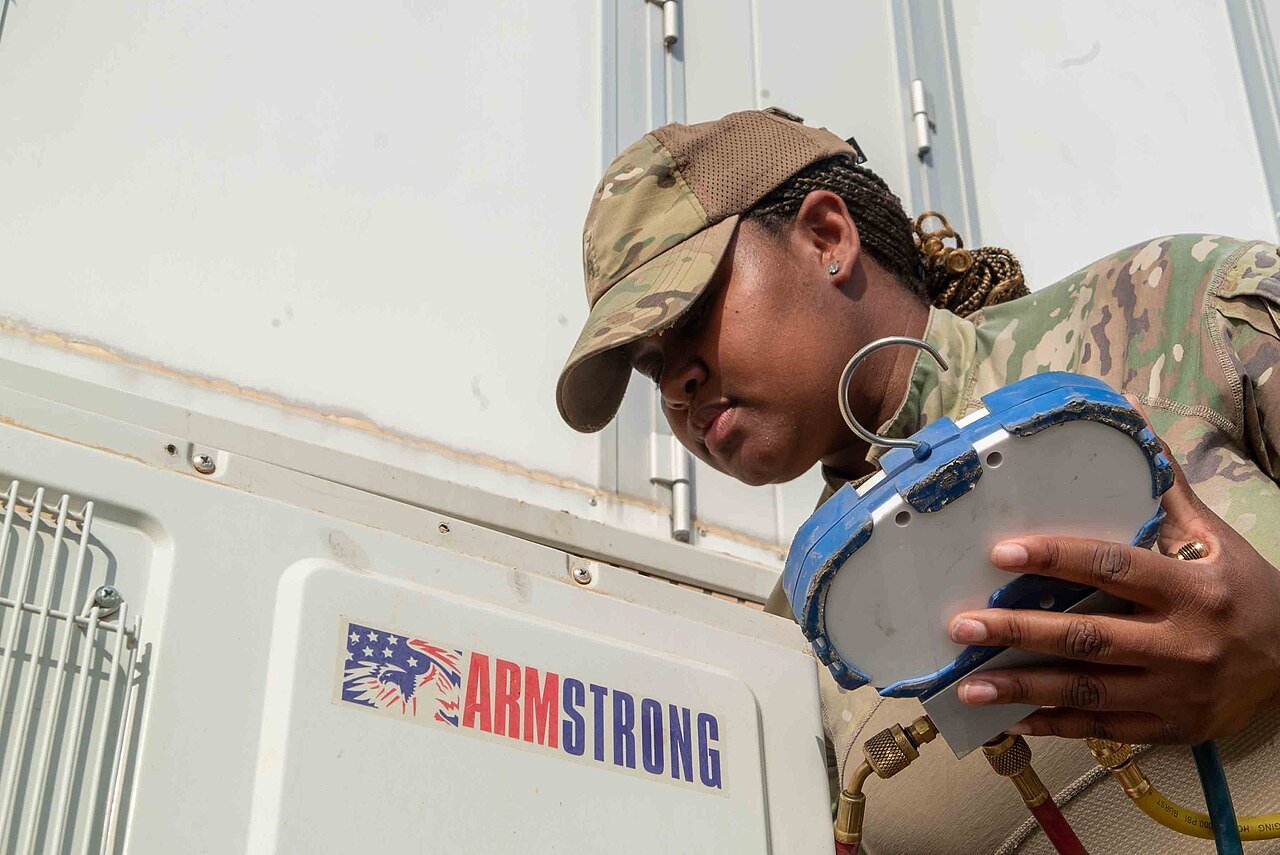
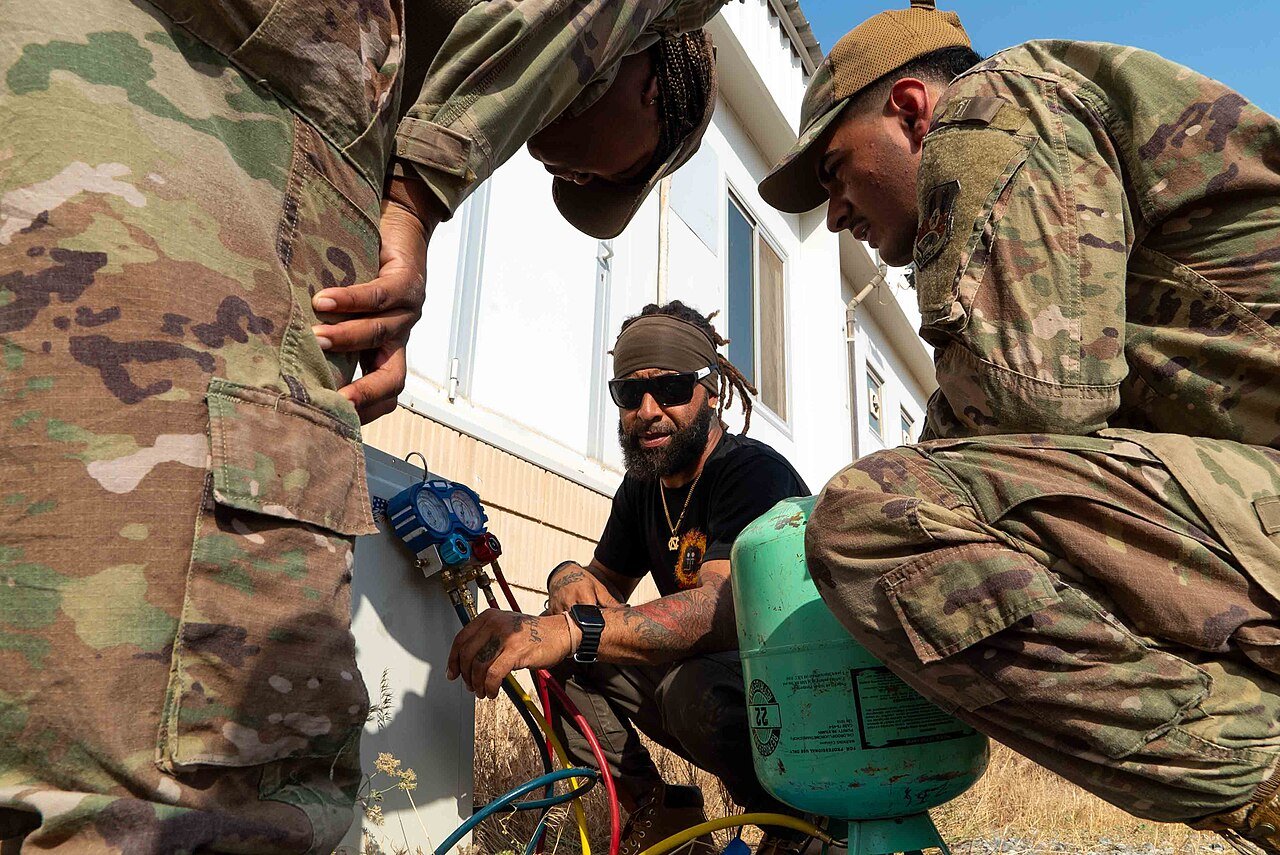
Featured image: technicians adjusting a gauge manifold while servicing an AC unit. U.S. Air Force photo by Senior Airman Mark Colmenares, via Wikimedia Commons, public domain. Calculations follow 40 CFR 84.102 as published on Cornell LII and summarized in EPA’s January 2026 fact sheet, last checked 29 October 2026.
